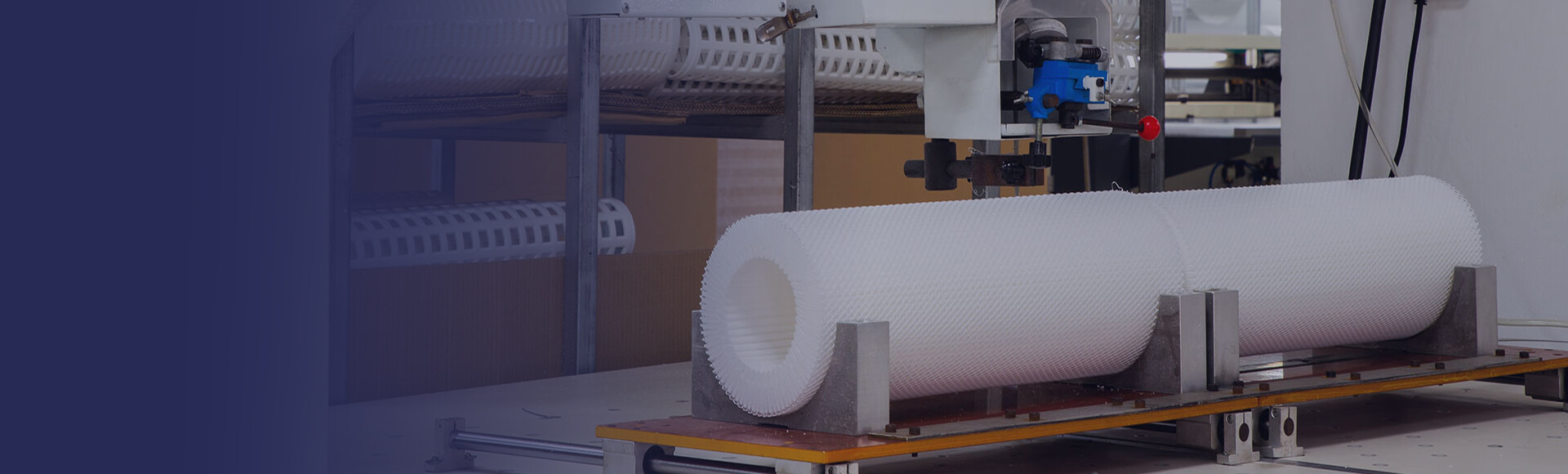
O cartucho filtrante de alto fluxo Ultra-H da Brother Filtration, conhecido como um excelente substituto para o elemento de alto fluxo 3M Cuno, teve seu desempenho aprovado por uma grande planta química de carvão chinesa.
A China investiu 550 bilhões de CNY neste projeto, que ocupa uma área total de 815,67 hectares, sendo a área construída da planta de 334,4 hectares. Nesta planta, o carvão é utilizado como matéria-prima, com um consumo anual de 19,376 milhões de toneladas de carvão bruto, 5,219 milhões de toneladas de carvão combustível, totalizando 24,595 milhões de toneladas.
O consumo anual de água do projeto é de 24,78 milhões de metros cúbicos.
O projeto foi concluído e entrou em operação, produzindo 4,05 milhões de toneladas de petróleo por ano, sendo a maior carteira de investimento único e a maior instalação do mundo com direitos de propriedade intelectual independentes do projeto de demonstração de liquefação indireta de carvão.
A Brother Filtration, como especialista no campo da filtração, tem o prazer e se sente honrada em fazer parte deste projeto, fornecendo nossos produtos de filtração e resolvendo todos os desafios de filtração neste empreendimento.
Este projeto consiste na primeira fase da planta de pré-tratamento e dessalinização por membrana, que inclui o pré-tratamento e a dessalinização por membrana dos resíduos da mina, o pré-tratamento e a dessalinização por membrana das águas residuais da indústria química do carvão, e o tratamento das descargas em conformidade.
O tratamento total de água nesta fase atinge 5000 m³/h, exigindo 16 carcaças de filtro de alto fluxo em duas unidades. A capacidade de tratamento de água para cada carcaça atinge 300 m³/h, e cada carcaça contém oito elementos filtrantes de 40 polegadas.
Em uma planta industrial, existem dois sistemas de osmose reversa. A água bruta é combinada com águas residuais e água de mineração após a pré-filtração e a filtração por membrana de osmose reversa. Após o tratamento pela membrana de osmose reversa, a água segue para o próximo processo de produção.
Até agora, fornecemos 6.000 unidades do filtro de alto fluxo Ultra-H para esta planta, e o desempenho tem sido bastante bom. Nosso filtro de cartucho de alto fluxo Ultra-H é equipado com grande capacidade de retenção de sujeira, alta vazão e área de filtração superior graças à tecnologia de dobras verticais. A Brother Filtration está entusiasmada e orgulhosa por ser a fornecedora especificada.
Filtro de cartucho de alto fluxo de 40 polegadas = 12 m² de área de filtração;
Filtro de cartucho de alto fluxo de 60 polegadas = 18 m² de área de filtração;
O cartucho de filtro de alto fluxo Ultra-H pode lidar perfeitamente com altas vazões e grande capacidade a um custo competitivo. O cartucho de filtro de alto fluxo Ultra-H é um substituto perfeito para o elemento de filtro de alto fluxo da 3M CUNO, e sua capacidade já foi aprovada.
Estamos muito orgulhosos de ter a oportunidade de fornecer nosso cartucho de filtro Ultra-H para uma planta química de carvão tão grande na China e de participar deste projeto.
A Brother Filtration projeta e fabrica o cartucho filtrante de alto fluxo Ultra-H como uma opção alternativa em comparação com o cartucho filtrante de alto fluxo da 3M CUNO.
Em comparação com o elemento de filtro de alto fluxo da 3M CUNO, sua capacidade e desempenho de filtração foram reconhecidos neste projeto.
The ocean occupies most of our planet, and desalination has been used more and more widely over the past 20 years. By using reverse osmosis systems, we help desalination plants to do their job and further help more plants to solve the problem of water shortage.
Every chemical plant is inseparable from industrial water filtration systems. Whether it is the purification and filtration of raw materials and final products or the treatment of industrial wastewater and unwanted chemicals generated during the production process, industrial filtration is a top priority.
Most petrochemical industry products are stored in large containers, such as diesel, gasoline, and fuel oil. This type of storage is highly likely to lead to impurities in the products and affect the product quality. Our mission is to offer efficient and reliable filtration systems for the petrochemical industry so that purification is not a big challenge.
The extremely rapid growth of the pharmaceutical industry has created a greater demand for industrial filtration. Whether it’s upstream cell fermentation, purification, or filtration, we can provide the solution. In addition, We are committed to filtration and separation, protecting the reliability and safety of production equipment.
The food and beverage industry is closely related to the daily life and health of each of us. Therefore, we must meet higher standards to filter these products. As your experts, we help you improve product quality, reduce production costs, and safeguard everyone’s health.
Nature itself has the ability to treat wastewater. But with the huge increase in human production and living activities, it can no longer handle such large amounts of wastewater. We, as industrial treatment producers, help nature to share the burden of wastewater treatment.
Industrial wastewater from mining activities contains high volumes of heavy metals, particulates, and residual chemicals. Wastewater must be purified and filtered in order not to pollute our water resources. We help your plant meet wastewater discharge standards.
In order to extract oil more efficiently and conveniently, large amounts of water must be injected underground to ensure water pressure. And since precious water resources are limited, our technology allows wastewater to be purified so that it can be reused.
When it comes to marine filtration, the first scene that appears in people’s is usually the sea or seawater. But marine filtration is more than seawater. A crucial resource on this planet is seawater. Large amounts of seawater are needed to generate fresh water for drinking and irrigation in locations with a lack of fresh water, just as ships sailing on the ocean need a lot of it for ballast water to keep the ship balanced. Marine filtration is not only about the seawater, but also the transported seawater. The ballast water is a kind of transportation of water. The cargo ships load the seawater from one place and discharge it at another port. The seawater traveled with the cargo ship in ballast tanks. This is the point many people will be indifferent about, the filtration before the discharge of the ballast water. People are familiar that we can not drink seawater directly, because it contains large quantities of salt and contaminants. But why do we need filtration for ballast water? it is just the seawater discharge into seawater. With the development of the environmental protection concept and the perfection of the law, we are constrained to filter the ballast…
The science and practice of extracting metals or metal compounds from minerals and transforming them into metallic materials with specific qualities using a variety of processing techniques is known as metallurgy. With the development of technology and the metallurgy industry, the filtration market in this area grows quickly annually. The need for filtration is increasing and the filter equipment is also developing. In the metallurgy industry, the rolling mill coolant and lubricate system need a filtration system. Equipment coolant and lubricating oil need to be filtered to remove contaminants and accomplish recycling in the metallurgical process in order to save input costs. Filtration can help to extend equipment service life and help equipment stay at optimum level. Based on their different filtration needs and characteristic, they have respective suitable filtration elements. For the rolling mill coolant system, continuous filtration is crucial, so the automative self-cleaning filter is a great choice for this system. When it comes to the hydraulic and lubricating system, the most important point is to remove the tiny metal debris and other impurities generated due to thermalization. Depth filter cartridge can be the best choice for this operation, which can effectively eliminate the undesired micro impurities. Brother Filtration,…
The Paper industry has a centuries-old history, our ancients used the traditional way to produce paper, and now we use advanced technology to produce more delicate and high-quality paper for all kinds of uses. The tissue, the printing, publication, and the packaging, all need paper. Behind the pliable and smooth surface of a piece of paper, there are many procedures that need filtration. The starch slurry, which is the primeval form of the paper requiring filtration to improve the quality and eliminate the undissolved starch particles. The exquisite coated paper, you often find in magazines or the first few pages of a book, is processed by the coating technology. The coating paints also need to be filtered. According to the viscosity level, there are different types of filters suitable for low-viscosity and high-viscosity liquids. Water is the basic and key resource for many industries, pulp & paper is no exception. Using a filtration system to filter lakes or rivers’ water is a cost-effective way to do water resources management. Additionally, wastewater can be reused and lawful discharged after filtration. Filtration plays an important role in the pulp & paper industry, infiltration for this field, automative self-cleaning filter is the most…